Expert Scenarios on Russia’s Future
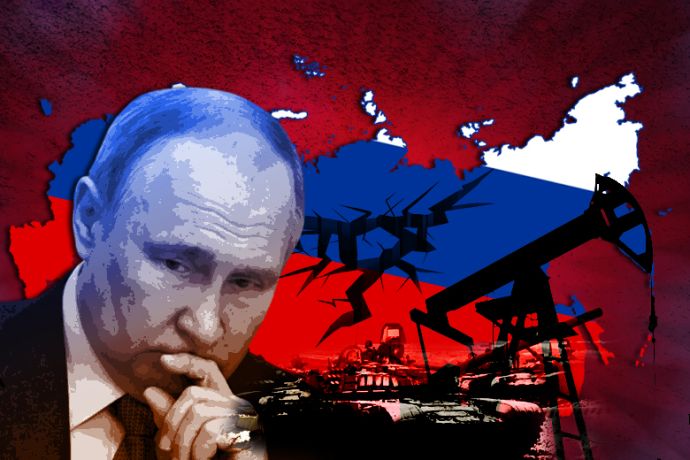
The dynamics of power and political strategy in Russia could unexpectedly turn upside down. A likely scenario is that Ukraine, having acquired a sufficient arsenal, would initiate an effective offensive, as a result of which, Russia would be forced to agree to negotiations on Ukraine’s and its allies’ terms. Such a turn of events would be the natural consequence of the self-serving disengagement from reality and isolation that Putin demonstrated at his December 14, 2023, press conference and which has been deliberately conditioned by his advisors.
The looming Ukrainian counteroffensive and the flight of Russian troops from the battlefield in 2023 forced Putin to dismiss a number of senior military officers and to make various adjustments in management. His cancelling of a press conference reflected his recognition of the depth of the crisis. The current confidence that he expressed at the most recent press conference seems to be an illusion in light of Moscow’s military and economic difficulties. Instead of solving problems, Putin is choosing a path of self-reassurance and the reassurance of those around him. Such a reaction indicates his lack of understanding of the scale of the problem. Only another crisis is likely to force Putin to realize the seriousness of the situation and to take effective steps, as happened last year.
In spite of such maneuvers, at a certain point Putin will realize that he teeters on the brink of disaster. He will have to recognize that his rule will end under the pressure of his closest advisors. Seeing the hopelessness of the situation, they will demand his resignation, arguing that Ukraine and its allies, in light of his deeds, is the likely outcome of his case before the International Criminal Court, and will categorically refuse to include him in any dialogue. Putin, whose desire to save face and to preserve his place in history is paramount, will step aside in the hope of remaining not just a footnote in Russia’s history but as a symbol of its unyielding spirit.
However, should Putin decide to cling to power and preserve the armor of presidential immunity, his entourage may resort to drastic measures to preserve their own survival. A new leader will then emerge from Russia’s political aristocracy. Sharing the aspirations of the current elite, the new leader will represent the continuity of power under the guise of turbulent change.
In my opinion, under either case the old methods of governance will remain unshakable, like the laws of physics.
The next phase in the Kremlin will start when the FSB attacks Chechnya in hopes of achieving the success achieved by Putin a quarter of a century ago. The FSB hates Kadyrov, considering him an uncontrollable and dangerous fool, but Putin has protected him. Once Putin is gone the FSB and armed forces will announce a Third Russian-Chechen War and kill Kadyrov. This will confirm the standing of the FSB and army and also distract the public from Russia’s military failures in Ukraine and from the subsequent humiliating diplomatic negotiations. By using an iron hand to enforce civic peace in Chechnya, Putin’s successors will repeat Putin’s success, earning thunderous applause from the grateful Russian people.
The new leadership will seek to restore order and will implement reforms in Chechnya, so as to signal to the West its decisive rejection of past despotism and human rights violations. They will parade Chechnya as a beacon for the truly democratic forces in Russia and as the symbolic start of a new order in Moscow based on freedom, justice, and new relations with the West.
Russia’s new leader or leaders can justify their Third Russian-Chechen War either by citing Ramzan Kadyrov’s attempts to secede from the Russian Federation or by the chaos that will inevitably flare up there after his sudden demise and the subsequent internal clan struggle for power. The scenario may change, but the essence remains the same, for Chechnya has always been a convenient excuse for internal manipulations within the Kremlin.
Reports of yet another order being established in Chechnya will be met with ovations among the Russian population. Some democratic forces will hail it as marking the end of Kadyrov’s provocative actions and immoral lifestyle. Indeed, Chechnya’s centuries-long struggles with Russia, has taken root in the collective memory of the Russians as an archetypal tale. The Caucasian wars and endless conflicts have become part of the subconscious heritage of every resident of Russia, reproducing from generation to generation as a cautionary myth about a troubled region. It is there, ready to be exploited once more by a new but still cynical Kremlin leadership.
In the end, the essence of the Russian system will remain unchanged. Although it may change outwardly, even to the extent of again sacrificing Chechnya on the altar of strategic interests, its fundamental mechanisms and structures will remain untouched. This is due to the absence of a force that could offer resistance. In Russia itself, the groundwork of a democratic society capable of real change in the modern world has yet to be formed.
The looming Ukrainian counteroffensive and the flight of Russian troops from the battlefield in 2023 forced Putin to dismiss a number of senior military officers and to make various adjustments in management. His cancelling of a press conference reflected his recognition of the depth of the crisis. The current confidence that he expressed at the most recent press conference seems to be an illusion in light of Moscow’s military and economic difficulties. Instead of solving problems, Putin is choosing a path of self-reassurance and the reassurance of those around him. Such a reaction indicates his lack of understanding of the scale of the problem. Only another crisis is likely to force Putin to realize the seriousness of the situation and to take effective steps, as happened last year.
In spite of such maneuvers, at a certain point Putin will realize that he teeters on the brink of disaster. He will have to recognize that his rule will end under the pressure of his closest advisors. Seeing the hopelessness of the situation, they will demand his resignation, arguing that Ukraine and its allies, in light of his deeds, is the likely outcome of his case before the International Criminal Court, and will categorically refuse to include him in any dialogue. Putin, whose desire to save face and to preserve his place in history is paramount, will step aside in the hope of remaining not just a footnote in Russia’s history but as a symbol of its unyielding spirit.
However, should Putin decide to cling to power and preserve the armor of presidential immunity, his entourage may resort to drastic measures to preserve their own survival. A new leader will then emerge from Russia’s political aristocracy. Sharing the aspirations of the current elite, the new leader will represent the continuity of power under the guise of turbulent change.
In my opinion, under either case the old methods of governance will remain unshakable, like the laws of physics.
The next phase in the Kremlin will start when the FSB attacks Chechnya in hopes of achieving the success achieved by Putin a quarter of a century ago. The FSB hates Kadyrov, considering him an uncontrollable and dangerous fool, but Putin has protected him. Once Putin is gone the FSB and armed forces will announce a Third Russian-Chechen War and kill Kadyrov. This will confirm the standing of the FSB and army and also distract the public from Russia’s military failures in Ukraine and from the subsequent humiliating diplomatic negotiations. By using an iron hand to enforce civic peace in Chechnya, Putin’s successors will repeat Putin’s success, earning thunderous applause from the grateful Russian people.
The new leadership will seek to restore order and will implement reforms in Chechnya, so as to signal to the West its decisive rejection of past despotism and human rights violations. They will parade Chechnya as a beacon for the truly democratic forces in Russia and as the symbolic start of a new order in Moscow based on freedom, justice, and new relations with the West.
Russia’s new leader or leaders can justify their Third Russian-Chechen War either by citing Ramzan Kadyrov’s attempts to secede from the Russian Federation or by the chaos that will inevitably flare up there after his sudden demise and the subsequent internal clan struggle for power. The scenario may change, but the essence remains the same, for Chechnya has always been a convenient excuse for internal manipulations within the Kremlin.
Reports of yet another order being established in Chechnya will be met with ovations among the Russian population. Some democratic forces will hail it as marking the end of Kadyrov’s provocative actions and immoral lifestyle. Indeed, Chechnya’s centuries-long struggles with Russia, has taken root in the collective memory of the Russians as an archetypal tale. The Caucasian wars and endless conflicts have become part of the subconscious heritage of every resident of Russia, reproducing from generation to generation as a cautionary myth about a troubled region. It is there, ready to be exploited once more by a new but still cynical Kremlin leadership.
In the end, the essence of the Russian system will remain unchanged. Although it may change outwardly, even to the extent of again sacrificing Chechnya on the altar of strategic interests, its fundamental mechanisms and structures will remain untouched. This is due to the absence of a force that could offer resistance. In Russia itself, the groundwork of a democratic society capable of real change in the modern world has yet to be formed.
Inal Sherip
Minister of Foreign Affairs of the Chechen Republic of Ichkeria
*Published in January 2024 at “Expert Scenarios on Russia’s Future” is a Silk Road Paper published by the Central Asia-Caucasus Institute and Silk Road Studies Program, Joint Center. The Silk Road Papers Series is the Occasional Paper series of the Joint Center, which addresses topical and timely subjects. The Joint Center is a transatlantic independent and non-profit research and policy center. It has offices in Washington and Stockholm and is affiliated with the American Foreign Policy Council and the Institute for Security and Development Policy. It is the first institution of its kind in Europe and North America, and is firmly established as a leading research and policy center, serving a large and diverse community of analysts, scholars, policy-watchers, business leaders, and journalists. The Joint Center is at the forefront of research on issues of conflict, security, and development in the region. Through its applied research, publications, research cooperation, public lectures, and seminars, it functions as a focal point for academic, policy, and public discussion regarding the region.