Ukraine, the Caucasus, Turkey: Route to a New Security Architecture

Seen soberly, investing in the resilience of the North Caucasus is part of a deterrence strategy, not “interference in internal affairs,” as Kremlin propaganda would frame it.
On Nov. 14, an overlooked but important meeting took place in Ukraine’s parliament, the Verkhovna Rada, between its Speaker Ruslan Stefanchuk and the prime minister of the Chechen Republic of Ichkeria, Akhmed Zakayev.
Speaking after the meeting, Stefanchuk underlined the political and moral dimension of the encounter.
“Meetings with a worthy son of the Chechen people and a great friend of Ukraine, Akhmed Zakayev, are always special,” Stefanchuk said.
“We discussed with the Prime Minister of the Chechen Republic of Ichkeria in exile our joint struggle of our brotherly peoples for freedom. We were, are, and will be together. And that means that together we will overcome Russian aggression and defeat chauvinistic dictatorship and tyranny,” he added.
The meeting happened two weeks after the international conference in Kyiv (“The North Caucasus as Europe’s Security Frontier”) and focused primarily on the Kyiv Declaration adopted there. This quick transition of the discussion of the conference topics to the level of parliamentary leadership sends an important signal: These topics are no longer treated as an abstract geopolitical sidenote.
Immediately after the meeting, I discussed its outcome with Akhmed Zakayev; he confirmed the relevance of the issues raised and the need to move from symbolic gestures to practical implementation. As he put it: “I thank the leadership of Ukraine for the attention they have given to the Chechen Republic of Ichkeria. The transition from military cooperation to political engagement is the most natural evolution of our relations.”
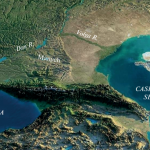
The significance of the North Caucasus for Ukraine’s – and therefore Europe’s – security is defined by more than geography. It’s a node of routes between the Black and Caspian Seas, a corridor for energy and trade, a valve for migration flows and a space where state and non-state actors intersect.
Any destabilization there is felt almost instantly in southern and eastern Ukraine as threats to infrastructure, logistics and public security. Add another factor: the Kremlin’s ability to extract human resources from the region to continue the war.
Seen soberly, investing in the resilience of the North Caucasus is part of a deterrence strategy, not “interference in internal affairs,” as Kremlin propaganda would frame it.
The Kyiv Declaration matters because it shifts the conversation from slogans to a manageable framework. Its logic is to fuse legal tools, sanctions policy, humanitarian protection and strategic communication into a single operational package.
Importantly, the Ukrainian part of the roadmap outlined in the declaration (institutionalizing interaction with actors of the North Caucasus agenda, setting rules for dialogue and introducing mechanisms that allow progress and responsibility to be measured) is addressed to the Ukrainian parliament.
This balanced approach begins with recognizing risks – rash moves can strengthen centripetal and centrifugal forces at once, pushing toward scenarios undesirable for the region and its neighbors.
A prudent approach is to “reinforce what reduces uncertainty”: build evidence for legal actions, provide verifiable data to policymakers and society, and support humanitarian mechanisms that lower the cost of exiting violence for the people rather than the elites. This simultaneously reduces vulnerability to external manipulation and keeps the course within international law.
Another element of the balanced approach is coalition-building.
The formation of an international coalition interested in curbing Russia’s destabilizing capabilities in the Caucasus must be pragmatic, not declarative. Turkey’s role is pivotal: a Black Sea power and key partner in security, energy and transport areas, with its own levers and sensitivities.
Continuing the conference in Turkey is a logical next step, but it’s crucial not to repeat the agenda of the event in Kyiv (from priorities of regional stability and mutual benefit to operational channels among parliaments, ministries and expert communities) – it should be adjusted to the Turkish perspective.
Success of this whole endeavor will be measured not by symbolic actions but by enabling synchronized procedures: data-sharing, joint risk assessments and interoperability of humanitarian and law-enforcement protocols.
Over the coming months, three practical tasks will become critical to our cause.
First, we must ensure that parliamentary assistance mechanisms proposed in the Kyiv Declaration begin to work, so the “Caucasus track” becomes a topic of the committee and plenary sessions, and doesn’t remain only a media topic. This means building a clear channel for dialogue with North Caucasus actors and for executing commitments.
Second, we intend to launch a public monitoring infrastructure that reduces information asymmetry: To ensure that the world sees the real picture of what’s happening in the region, we need unified data-collection approaches, regular reporting, transparent methodologies and witness protection.
Lastly, we have to improve the connection between political and legal actions, so that bold statements are accompanied by financial, administrative and coercive decisions that change incentives and constrain the resources of violence.
The recent meeting between the Chechen leader and the speaker of the Verkhovna Rada was very timely, as it consolidated the shift from event-driven impulses to institutional discipline. Ukraine’s interest is simple and transparent: The fewer options the Kremlin has to turn the North Caucasus into a mobilization reservoir and a platform for projecting instability, the better is Ukraine’s security and the sturdier Europe’s overall architecture.
This cannot be achieved by a single document or trip, but must be built through everyday work – meticulous, prosaic, and therefore reliable.
Kyiv has already taken a step by bringing the issue into the Ukrainian parliament and tying it to specific mechanisms. The next step is to listen to Ankara’s position, offer our partners measurable goals, and demonstrate that the “Caucasus track” is not adventurism but a technology-driven policy in which every new measure is verifiable in effect, reversible in risk and clear in procedure.
Only then will Europe have not only the right assessment of the situation, but also a real chance to heal a region that has remained in the blind spot for far too long.
On Nov. 14, an overlooked but important meeting took place in Ukraine’s parliament, the Verkhovna Rada, between its Speaker Ruslan Stefanchuk and the prime minister of the Chechen Republic of Ichkeria, Akhmed Zakayev.
Speaking after the meeting, Stefanchuk underlined the political and moral dimension of the encounter.
“Meetings with a worthy son of the Chechen people and a great friend of Ukraine, Akhmed Zakayev, are always special,” Stefanchuk said.
“We discussed with the Prime Minister of the Chechen Republic of Ichkeria in exile our joint struggle of our brotherly peoples for freedom. We were, are, and will be together. And that means that together we will overcome Russian aggression and defeat chauvinistic dictatorship and tyranny,” he added.
The meeting happened two weeks after the international conference in Kyiv (“The North Caucasus as Europe’s Security Frontier”) and focused primarily on the Kyiv Declaration adopted there. This quick transition of the discussion of the conference topics to the level of parliamentary leadership sends an important signal: These topics are no longer treated as an abstract geopolitical sidenote.
Immediately after the meeting, I discussed its outcome with Akhmed Zakayev; he confirmed the relevance of the issues raised and the need to move from symbolic gestures to practical implementation. As he put it: “I thank the leadership of Ukraine for the attention they have given to the Chechen Republic of Ichkeria. The transition from military cooperation to political engagement is the most natural evolution of our relations.”
The significance of the North Caucasus for Ukraine’s – and therefore Europe’s – security is defined by more than geography. It’s a node of routes between the Black and Caspian Seas, a corridor for energy and trade, a valve for migration flows and a space where state and non-state actors intersect.
Any destabilization there is felt almost instantly in southern and eastern Ukraine as threats to infrastructure, logistics and public security. Add another factor: the Kremlin’s ability to extract human resources from the region to continue the war.
Seen soberly, investing in the resilience of the North Caucasus is part of a deterrence strategy, not “interference in internal affairs,” as Kremlin propaganda would frame it.
The Kyiv Declaration matters because it shifts the conversation from slogans to a manageable framework. Its logic is to fuse legal tools, sanctions policy, humanitarian protection and strategic communication into a single operational package.
Importantly, the Ukrainian part of the roadmap outlined in the declaration (institutionalizing interaction with actors of the North Caucasus agenda, setting rules for dialogue and introducing mechanisms that allow progress and responsibility to be measured) is addressed to the Ukrainian parliament.
The formation of an international coalition interested in curbing Russia’s destabilizing capabilities in the Caucasus must be pragmatic, not declarative.This doesn’t imply romanticism or maximalism – just a set of steps that can be implemented as institutions become ready, avoiding legal vacuums and political improvisation.
This balanced approach begins with recognizing risks – rash moves can strengthen centripetal and centrifugal forces at once, pushing toward scenarios undesirable for the region and its neighbors.
A prudent approach is to “reinforce what reduces uncertainty”: build evidence for legal actions, provide verifiable data to policymakers and society, and support humanitarian mechanisms that lower the cost of exiting violence for the people rather than the elites. This simultaneously reduces vulnerability to external manipulation and keeps the course within international law.
Another element of the balanced approach is coalition-building.
The formation of an international coalition interested in curbing Russia’s destabilizing capabilities in the Caucasus must be pragmatic, not declarative. Turkey’s role is pivotal: a Black Sea power and key partner in security, energy and transport areas, with its own levers and sensitivities.
Continuing the conference in Turkey is a logical next step, but it’s crucial not to repeat the agenda of the event in Kyiv (from priorities of regional stability and mutual benefit to operational channels among parliaments, ministries and expert communities) – it should be adjusted to the Turkish perspective.
Success of this whole endeavor will be measured not by symbolic actions but by enabling synchronized procedures: data-sharing, joint risk assessments and interoperability of humanitarian and law-enforcement protocols.
Over the coming months, three practical tasks will become critical to our cause.
First, we must ensure that parliamentary assistance mechanisms proposed in the Kyiv Declaration begin to work, so the “Caucasus track” becomes a topic of the committee and plenary sessions, and doesn’t remain only a media topic. This means building a clear channel for dialogue with North Caucasus actors and for executing commitments.
Second, we intend to launch a public monitoring infrastructure that reduces information asymmetry: To ensure that the world sees the real picture of what’s happening in the region, we need unified data-collection approaches, regular reporting, transparent methodologies and witness protection.
Lastly, we have to improve the connection between political and legal actions, so that bold statements are accompanied by financial, administrative and coercive decisions that change incentives and constrain the resources of violence.
The recent meeting between the Chechen leader and the speaker of the Verkhovna Rada was very timely, as it consolidated the shift from event-driven impulses to institutional discipline. Ukraine’s interest is simple and transparent: The fewer options the Kremlin has to turn the North Caucasus into a mobilization reservoir and a platform for projecting instability, the better is Ukraine’s security and the sturdier Europe’s overall architecture.
This cannot be achieved by a single document or trip, but must be built through everyday work – meticulous, prosaic, and therefore reliable.
Kyiv has already taken a step by bringing the issue into the Ukrainian parliament and tying it to specific mechanisms. The next step is to listen to Ankara’s position, offer our partners measurable goals, and demonstrate that the “Caucasus track” is not adventurism but a technology-driven policy in which every new measure is verifiable in effect, reversible in risk and clear in procedure.
Only then will Europe have not only the right assessment of the situation, but also a real chance to heal a region that has remained in the blind spot for far too long.
Inal Sherip
Minister of Foreign Affairs of the Chechen Republic of Ichkeria
Source: Kyiv Post